Downloadable Book
 Downloadable Book
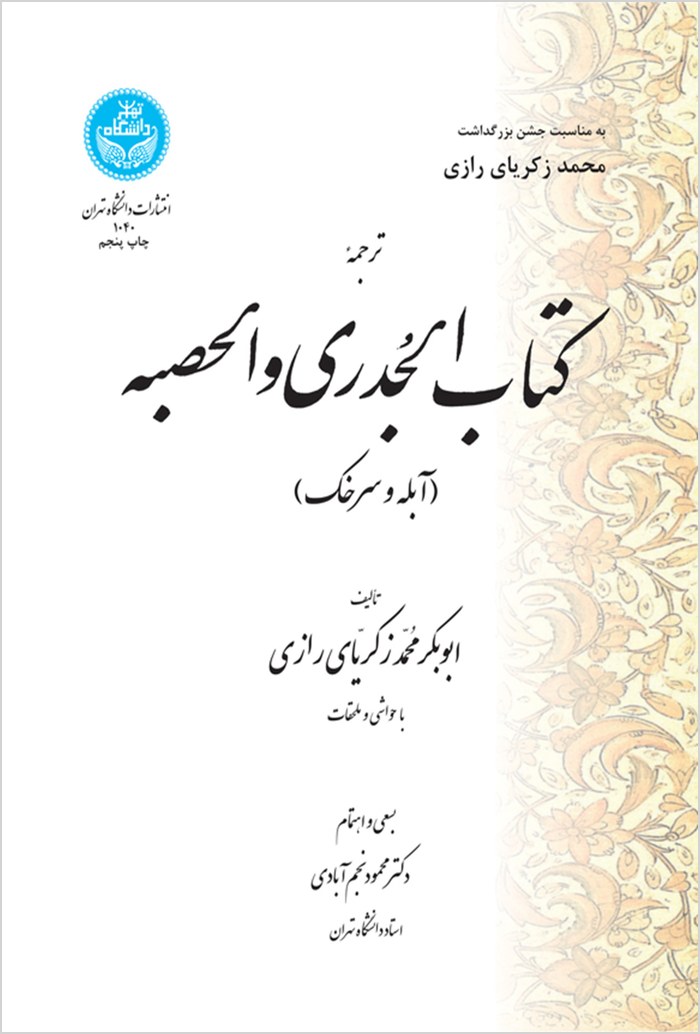
Tarjumah-‘i al-Jadarī va al-Ḥaṣbah (Surkhak va ābilah) bā ḥavāshī va mulḥaqāt
ترجمه الجدری و الحصبه (سرخک و آبله) با حواشی و ملحقات
Price range: £10.20 through £29.00
Abū Bakr Muḥammad ibn Zakarīyā-yi Rāzī (Rhazes) stands among the towering figures of medieval Persian medicine, celebrated as physician, philosopher, and alchemist. This work presents Maḥmūd Najmʹābādī's Persian translation, with annotations and appendices, of Rāzī's treatise on smallpox and measles, al-Jadarī va al-Ḥaṣbah, regarded as the earliest clinical account in medical history to distinguish clearly between the two diseases. Drawing on years of bedside observation, Rāzī described the onset, progression, and complications of both illnesses with a precision unmatched in Europe for centuries; the treatise circulated widely in Latin translation from the sixteenth century onward and shaped Western understanding of infectious disease. Najmʹābādī's edition situates the treatise within an account of Rāzī's life and reputation among later biographers such as al-Bīrūnī and Ibn Abī Uṣaybiʻah, tracing its transmission from Baghdad through Europe, and appends a bibliography and index.
ابوبکر محمد بن زکریای رازی، پزشک و فیلسوف و شیمیدان بزرگ ایرانی که در مغربزمین به رازس شهرت دارد، یکی از برجستهترین چهرههای طب دوران اسلامی به شمار میرود. این کتاب برگردان فارسی محمود نجمآبادی از رساله معروف رازی با عنوان الجدری و الحصبه است که همراه با حواشی و ملحقات فراوانی عرضه شده و به باور بسیاری از پژوهشگران، نخستین شرح علمی و دقیق در تاریخ طب به شمار میرود که میان دو بیماری آبله و سرخک تمایز روشنی قائل میشود. رازی با تکیه بر تجربه بالینی گسترده خود، سیر هر دو بیماری را از آغاز تا پایان با ظرافتی تمام وصف کرده که همتای اروپایی آن قرنها بسیار بعدتر پدید آمد؛ این رساله از سده شانزدهم میلادی به زبان لاتین ترجمه شد و در سراسر اروپا انتشار یافت و بر شناخت پزشکی غرب از بیماریهای عفونی تأثیری ماندگار گذاشت. نجمآبادی در مقدمه مفصل خود، شرح حال رازی و بازتاب آوازه او نزد تذکرهنویسانی چون بیرونی و ابن ابیاصیبعه را نیز بازگو کرده و کتابنامه و فهرستی سودمند برای استفاده پژوهشگران بدان افزوده است.
Related products